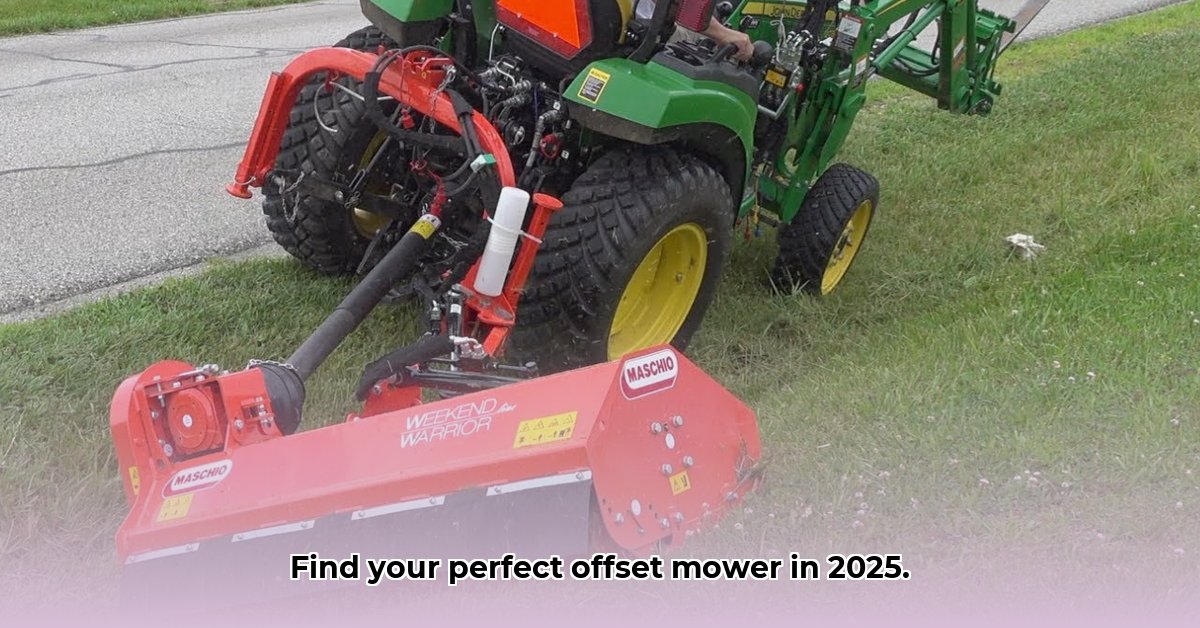
Choosing the right offset mower for your compact tractor is crucial for efficient and effective land management. This guide compares rotary and flail offset mowers, helping you select the best option for your needs and budget. We'll cover horsepower requirements, cutting width considerations, and essential factors to ensure a smooth and productive mowing experience. For more information on brush hog mowers, check out this helpful resource: compact tractor mowers.
Rotary vs. Flail Offset Mowers: A Detailed Comparison
The core decision lies in choosing between rotary and flail cutting mechanisms. Each offers unique advantages and disadvantages.
Rotary Offset Mowers: These mowers utilize spinning blades to cut grass and light brush. They're known for their efficiency, relatively low maintenance, and clean cuts, making them ideal for lawns and pastures. Think of them as precision tools for landscaping. However, they may struggle with denser vegetation.
Flail Offset Mowers: These mowers employ numerous swinging flails that shred vegetation. They're the heavy-hitters, excelling in tackling tough brush, weeds, and even small saplings. Their mulching capability is superior, resulting in a finer finish and improved soil health. But they typically require more maintenance and are more expensive than rotary mowers.
Which type is right for you? It depends on your specific needs. Do you primarily need to maintain a neat lawn, or do you need to clear denser vegetation? This question will determine which type of offset mower is the optimal choice.
Essential Factors for Choosing Your Offset Mower
Several key factors influence the performance and suitability of an offset mower for your compact tractor.
1. Tractor Horsepower: Matching the mower's horsepower requirements to your tractor's capabilities is paramount. Underpowering can lead to sluggish performance and potential equipment damage, while overpowering represents unnecessary expense.
2. Cutting Width: Wider cutting widths increase efficiency by covering larger areas in fewer passes. However, wider decks can be less maneuverable in tight spaces or on uneven terrain. A wider cut might be less desirable on a smaller property.
3. Vegetation Type: The type of vegetation you'll be mowing directly impacts the choice between rotary and flail mowers. Rotary mowers excel at cutting grass and light brush, while flail mowers are better suited for dense brush, weeds, and tougher vegetation.
4. Terrain: Uneven terrain requires a mower designed for stability and maneuverability. Offset mowers generally provide better maneuverability in challenging terrain compared to standard mowers. This is particularly important for navigating slopes and obstacles effectively.
5. Budget & Maintenance: While initial costs vary considerably, consider the long-term costs of maintenance and repairs. Some mowers might require more frequent servicing. A more durable, higher-priced mower might offer better value over its lifespan.
Actionable Steps to Selecting the Right Offset Mower
- Assess Your Needs: Evaluate your property size, terrain, and vegetation type to determine your specific mowing requirements. (Consider factors like slope, obstructions, and the density of plant life).
- Determine Your Budget: Consider both the initial purchase price and long-term maintenance costs.
- Choose the Right Mower Type: Select a rotary mower for lawns and light brush or a flail mower for denser vegetation and tough conditions. (Remember, flail mowers excel at mulching, which benefits soil health).
- Match Horsepower: Ensure your tractor boasts sufficient horsepower for the chosen mower to avoid performance issues. (Underpowered mowers can become extremely inefficient).
- Select Appropriate Cutting Width: Balance efficiency (wider cutting widths) with maneuverability (narrower cutting widths) based on your property's characteristics.
- Prioritize Safety: Always adhere to manufacturer safety guidelines and use appropriate personal protective equipment (PPE).
By following these steps, you can confidently choose the offset mower that best meets your needs, ensuring efficient and effective land management. Remember, choosing the right equipment is a significant investment that directly impacts task efficiency and the overall quality of your landscape. Investing now can save you frustration, time, and resources in the future.